
Is Empathy a Feeling or a Discipline?
Why it may be less about emotion and more about presence
Lately, I’ve been writing conversations between two historical women who never met: Wu Zetian, the only female emperor in Chinese history, and Edith Stein, a philosopher who devoted much of her early work to understanding empathy.
Wu Zetian explored power.
Stein explored something quieter—but perhaps just as influential: how we understand the inner lives of others.
Stein began her career as a philosopher studying the nature of empathy. Her central question was deceptively simple: How can we know another person’s experience if we cannot actually feel what they feel?
Her answer still feels strikingly relevant today.
Empathy, she argued, is not the same as feeling someone else’s emotions as if they were our own. Instead, it is a way of perceiving another person’s experience while recognizing that it belongs to them, not to us.
In other words, empathy holds two awarenesses at once:
“I sense what you may be experiencing… and I know it is not my experience.”
That distinction matters.
Today, empathy is often described as “feeling what another person feels.” In leadership conversations—especially as we navigate an era of AI and rapid change—we are encouraged to become more empathetic than ever.
But if empathy means absorbing the emotions of everyone around us, most of us would burn out quickly—and many people do.
Perhaps empathy is something different. Perhaps it is less a feeling and more a discipline—a practice of paying attention to another human being without losing our own center.
Stein’s life traced an extraordinary arc. Her philosophical exploration eventually led her into a spiritual path and the Carmelite religious order. During World War II, she was arrested by the Nazis because of her Jewish ancestry and deported to Auschwitz.
Witnesses later described a striking presence among the prisoners: a quiet nun moving through the chaos, comforting frightened children, helping mothers care for their babies, and offering calm where panic threatened to take hold.
She could not remove the suffering around her. But she could remain present to it.
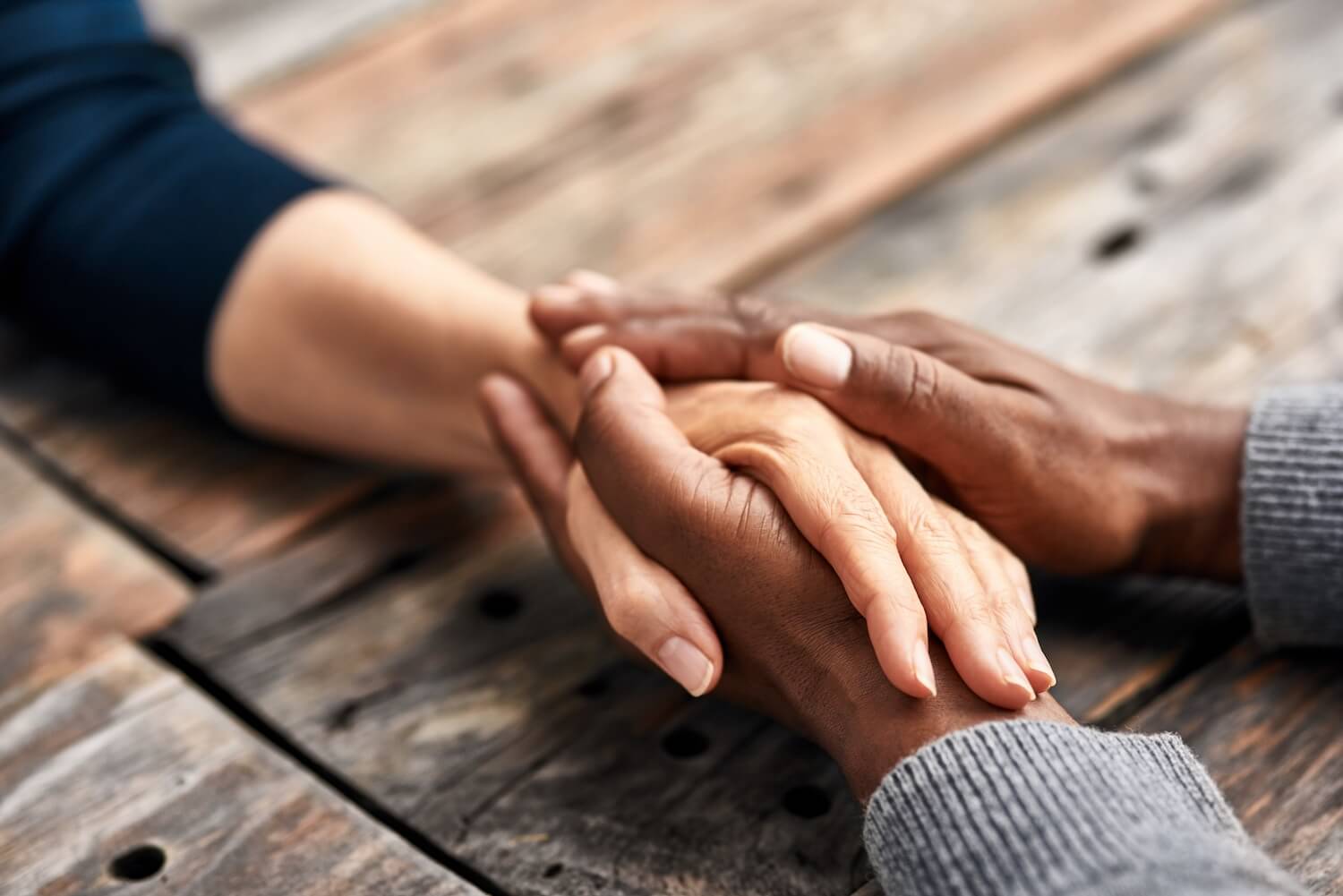
Perhaps that is the deepest form of empathy—not merging with another’s pain, but standing beside it with steady attention and care.
In mindfulness practice, we sometimes call this holding space. And maybe that’s a helpful reframe for our times.
Empathy may not be about feeling exactly what another person feels. It may be about cultivating the capacity to stay present with another human being—curious, compassionate, and grounded—especially when life is hard.
Here’s to learning, little by little, how to stand beside one another with open eyes and steady hearts.